
Good news for once!
This week we got good news for once
This week, Letter to a Gamer finally has some good news: Nintendo's patent for summoning creatures has been revoked, and Italy has selected its own national Overwatch team. Of course, there's also the usual bad news, including layoffs for failed projects and AI-related issues.
News index
+ Nintendo's character-summon patent got revoked
- Marathon "will be here for many years," Bungie's comments post-launch
+ Stormgate will lose its online component due to AI
- Eidos Montreal hit by 124 layoffs and a change of leadership
+ Warhorse (KCD2) lays off employees to replace them with AI
- Here's the Italian Overwatch National Team
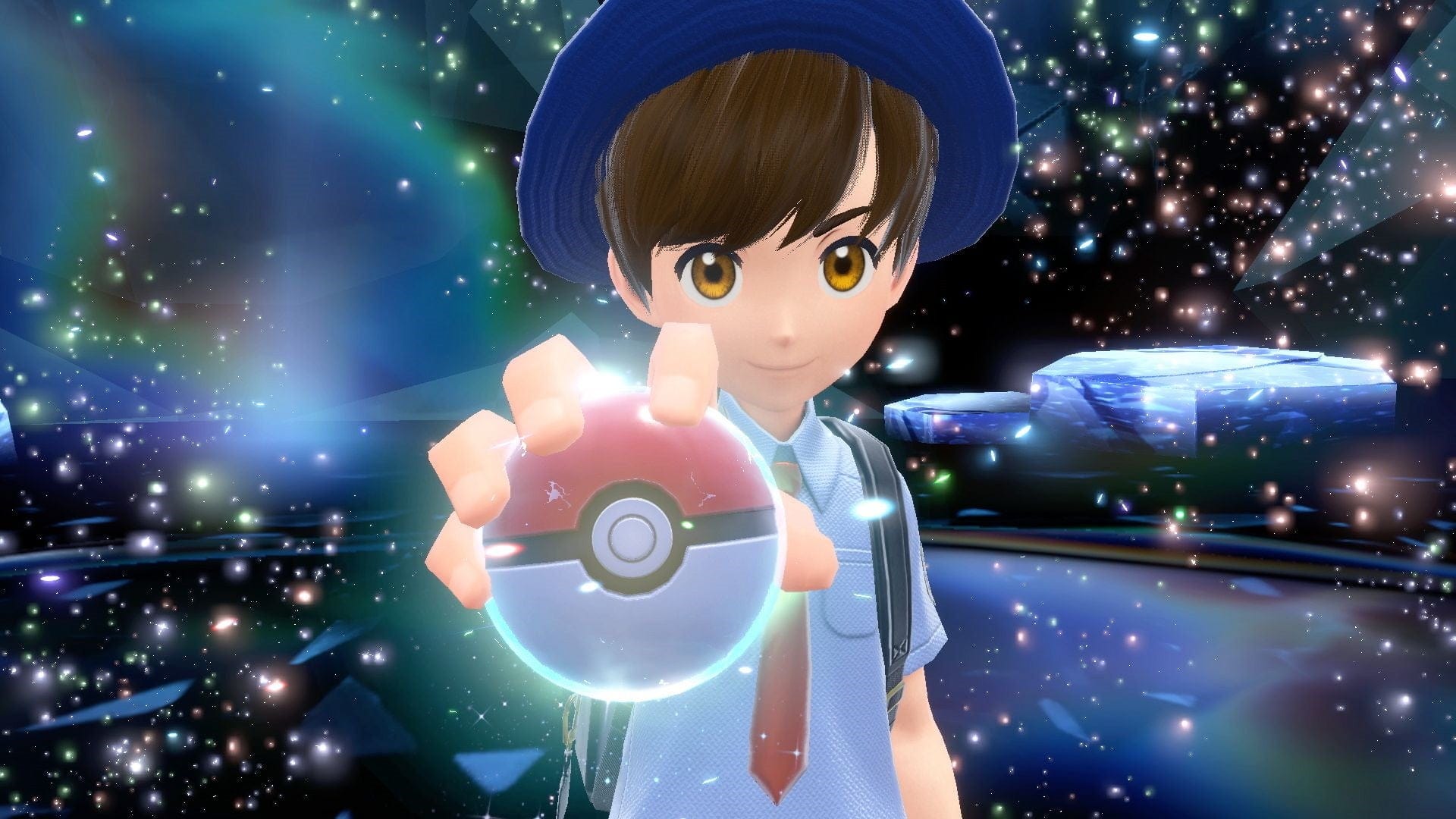
Nintendo's character-summon patent got revoked - In a rare victory for the entire video game industry, one of the patents granted to Nintendo and The Pokémon Company in September 2025 has been revoked. The patent focused on the ability for players to summon a "sub-character" to join battles using one of two battle modes. The U.S. Patent Office rejected all 26 claims of the patent, deeming the claimed inventions "obvious." In the office's words: "The invention is not sufficiently novel to warrant a patent, or does not provide an innovation that a person skilled in the art could not have conceived by combining preexisting ideas". The patent for mounts, which Nintendo claims covers the "seamless switching of mountable objects or the act of rapidly moving through environments by tethering to a target object, such as a creature," remains in place.
Marathon "will be here for many years," Bungie's comments post-launch - According to estimates from Alinea Analytics, the extraction shooter set on Tau Ceti 4 has sold 1.2 million copies to date, including 800,000 on Steam, 217,000 on PlayStation 5, and 133,000 on Xbox Series S and X. This has raised some concerns among fans about the game's future. In the official guide for improving PC performance, the developers promised "many years" of constant improvements for the game: "While we're very proud of what we've achieved with the overall look and feel since the Alpha, we're committed long-term to Marathon. We look forward to continuing to consistently improve every aspect of the game for many years. Thank you for taking this journey with us!". The final say rests with Sony, which bought Bungie for $3.6 billion, but the Japanese company could have its hands tied: shutting down Marathon would also mean a mortal blow for Bungie and the definitive admission that it has lost the race for live service games after the Concord disaster and the cancellation of six of the 12 multiplayer games it had in the works.
Stormgate will lose its online component due to AI - The real-time strategy game, developed by the StarCraft vets who left Blizzard to found Frost Giant Studios, has announced that it will no longer support its online mode by the end of April 2026. The reason is that the company that manages its servers, Hathora, has been acquired by an AI company. The studio has announced that it hopes to reintroduce online mode in the future, but the game is currently being updated to remain playable offline. Having computing power connected to the network (the definition of a server) is an increasingly more costly expense for development studios because artificial intelligence has an insatiable hunger for compute, and any source is good at meeting this ever-growing demand.
Eidos Montreal hit by 124 layoffs and a change of leadership - The studio that gave birth to Deus Ex and helped develop the Tomb Raider series and the Guardians of the Galaxy video game is the latest victim of the current period of significant downsizing in the video game industry. David Anfossi, who worked at the studio for nearly two decades, was a producer on Deus Ex: Human Revolution, and has held the position of studio head since 2013, has also left the company. The studio's last hit was the Guardians of the Galaxy game in 2021, and since then, Eidos Montreal has been stuck acting as a support studio. A new project in the Deus Ex universe was pitched to several publishers, but none agreed to fund it because it was deemed "too niche".
Warhorse (KCD2) lays off employees to replace them with AI - Kingdom Come: Deliverance 2 developer reportedly fired Max Hejtmánek, the voiceover director and Czech-to-English translator, without warning. The reason? His role was "rendered obsolete in favor of using artificial intelligence for all future translations". Hejtmánek shared his story on the game's Reddit page, stating that he joined Warhorse Studios in 2022 and worked primarily on Kingdom Come: Deliverance 2 and its DLCs. The dismissal was "unexpected and a betrayal" and came while he was working on a project. Warhorse commented on the news with a bit of corpo speak that neither confirms nor denies: "Warhorse Studios has always been a talent-focused studio, and we deeply appreciate the people who help shape our work. Out of respect for the privacy and dignity of our colleagues, both current and former, we will not discuss individual situations publicly".
Here's the Italian Overwatch National Team - Italy has its own Overwatch national team for the Overwatch World Cup, which will be held at BlizzCon this September. The members, selected after several days of tryouts, are:
Tank
• Mikix
• Lvxght
DPS
• Xono
• Chimera
Support
• Littleplume
• Katekomi
• Unread
The national team coach is Federico “Adnar” Arena, who has just begun two weeks of intensive preparation for the World Cup Conference Cup (EMEA Qualifiers: April 17–19), with the stated goal of taking the team to top-form and proving its worthy status as a wildcard.
The competition days will be:
- Friday, April 17 – 6:00 PM (GMT+1)
- Saturday, April 18 – 2:00 PM (GMT+1)
- Sunday, April 19 – 2:00 PM (GMT+1)
What to play this weekend
Something new to try and discover for the first time
Looking for something new? Thrills? Tear-jerking stories? This list of recommendations has something for everyone, from new releases to early access titles to demos of upcoming video games that are still a long way off.
Project Songbird: Have you ever wondered what would happen if the mechanics of Firewatch, the plot of Alan Wake, and the atmosphere of Silent Hill were combined into one game? Horror fans can now answer that question with Project Songbird, a first-person narrative horror game starring a musician struggling with writer's block while recording his new album in a remote Appalachian cabin.
Aether & Iron: Disco Elysium, but in the 1930s, with a deco-punk setting and car racing in the form of turn-based tactical combat. The story is engaging, the atmosphere is well-crafted, the combat/racing is original, and there's a free demo to sample what the game has to offer. I was already sold on "anti-gravity car racing in an alternate 1930s New York," but there's also a great narrative to back this idea up.
Grime 2: Some of us need a Metroidvania always at hand to test our skills and push the limits of the genre. If you're a fan of this type of games and need a new mountain to climb, give Grime 2 a try. Its shape-shifting main character promises innovation, and its environments impressed me with their color, the bosses' presence, and the richness of their details.
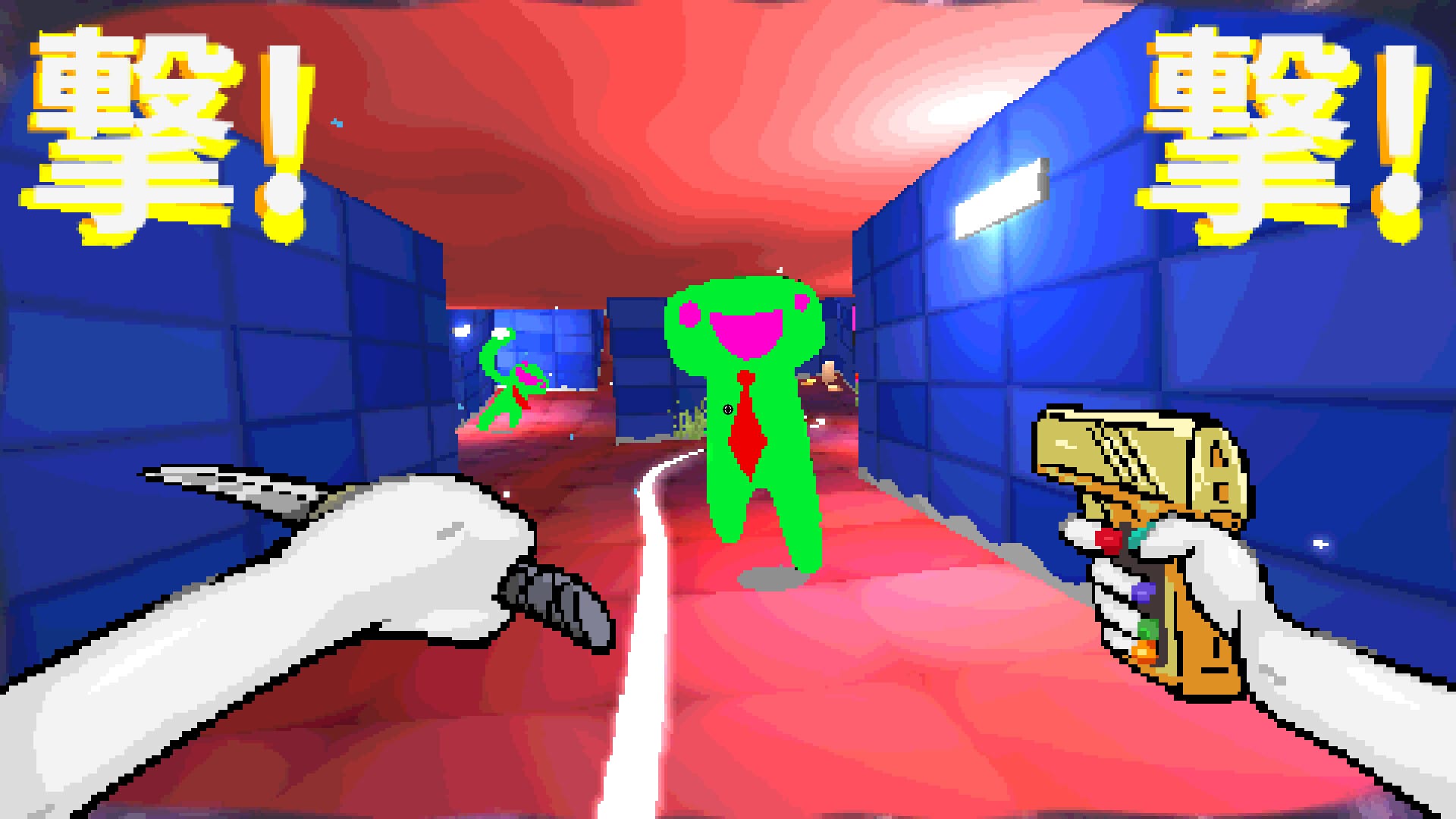
Tamashika: Is it a rhythm game? A movement shooter? An epileptic seizure simulator? It's all of this and more. Tamashika takes 10 minutes to complete, but its one single level changes every day because it's procedurally generated. Players are equipped with a pistol and a tanto blade, nothing else, but I highly recommend watching the trailer to understand the level of Japanese madness this game will offer starting April 10th.
Bloodletter Early Access review
Bloodletter is the last, not the latest, roguelike deckbuilder worth your attention
Bloodletter might be the last roguelike deckbuilder worth your attention, but only if you're patient. The release of Slay the Spire 2, with its half a million concurrent players on Steam, put an end to the race for imitations that began with Slay the Spire 1 in 2019.
After the success of the first installment, hundreds of clones attempted to replicate its success, some with more success and innovation than others. Thankfully, the deckbuilding craze is now dying down, but there may be one last child of this fad worth playing.
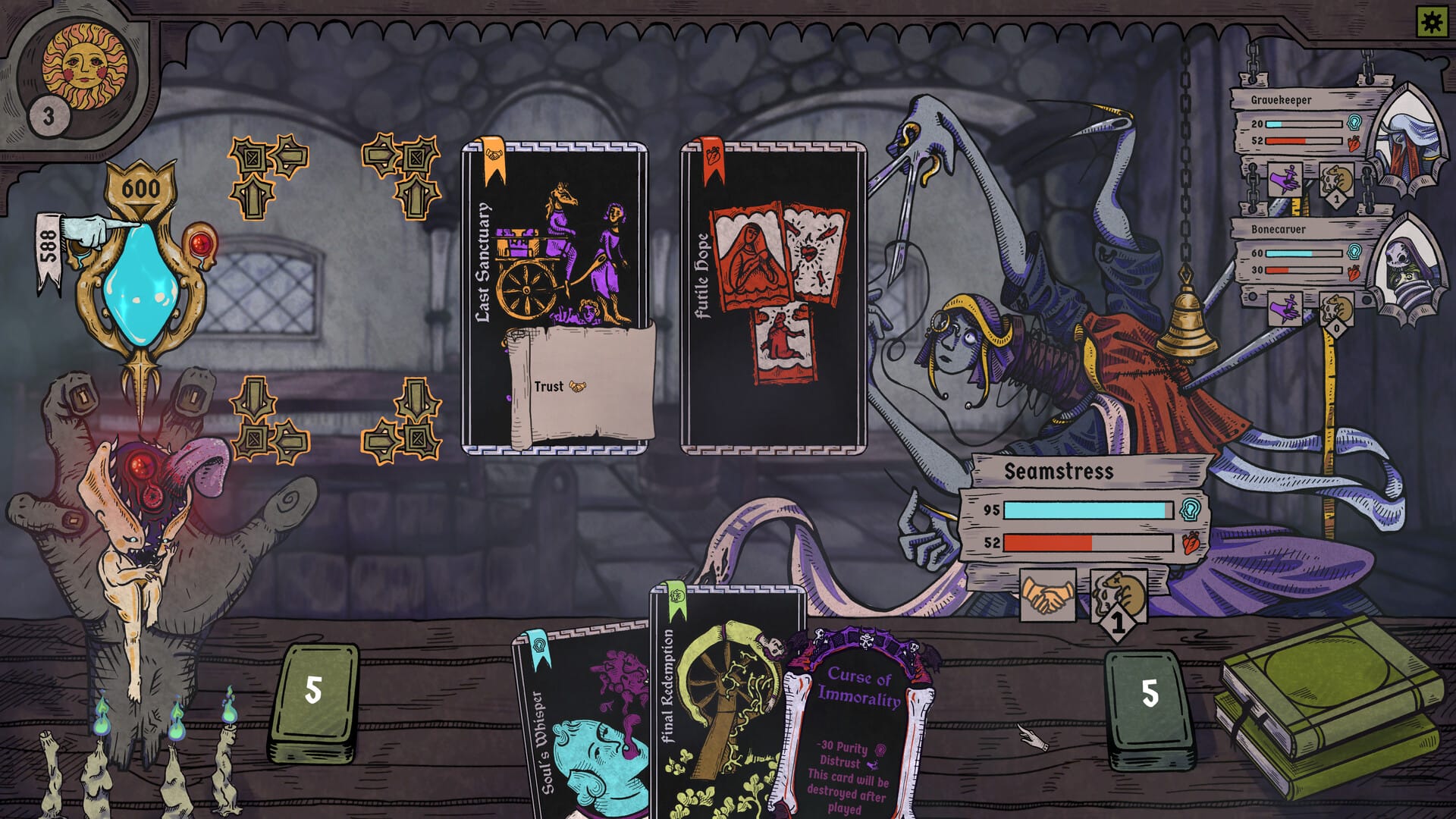
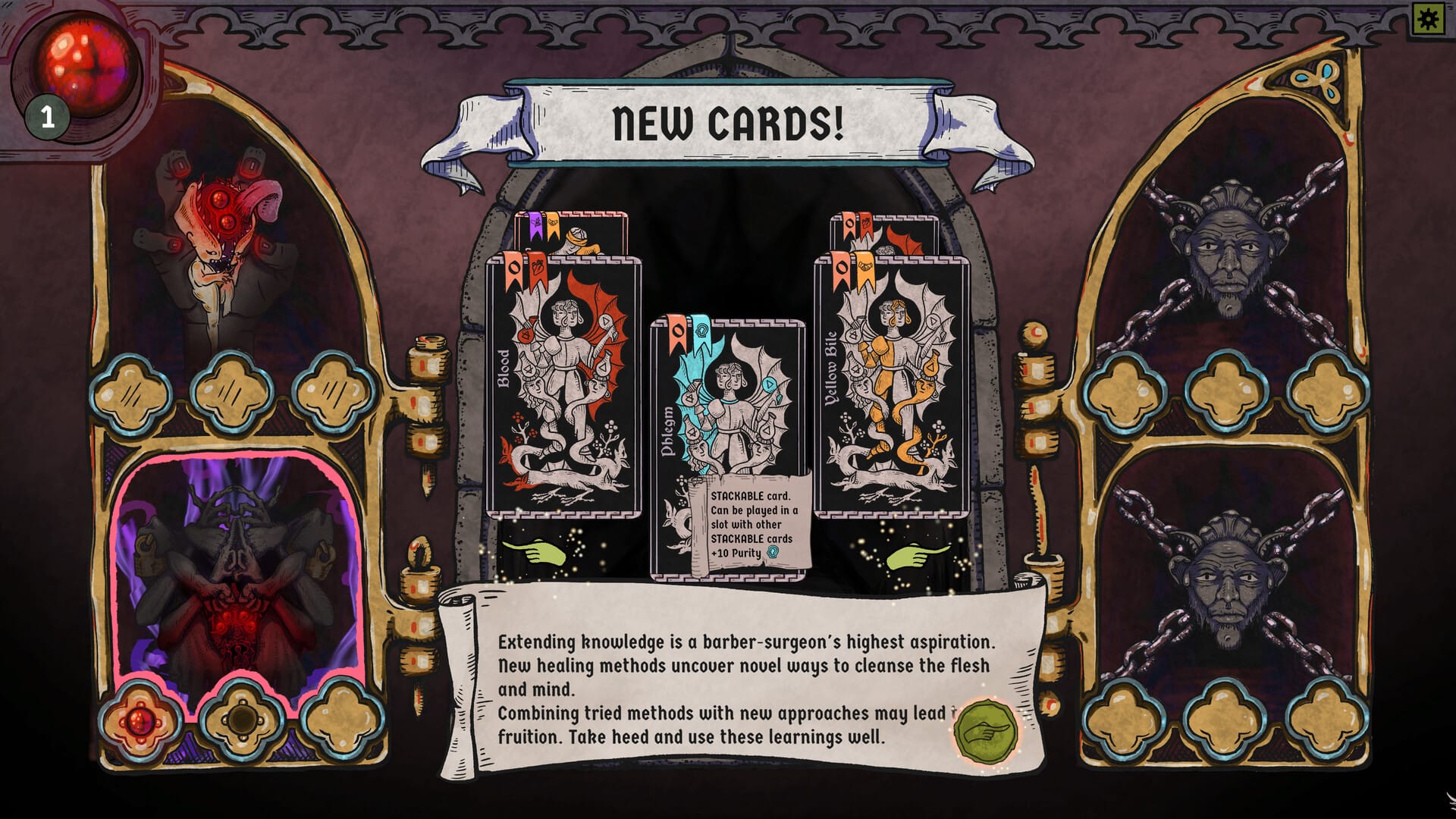
There are no duels here, but a medieval village under the yoke of evil entities that must be defeated with purification, trust, and well-being. In Bloodletter, the player takes on the role of a barber-surgeon to whom the villagers come for treatment.
Every night, an evil spirit lowers their health and purity, makes them ill, and sows distrust towards everything and everyone. During the day, with a customizable and upgradeable deck of cards, it is the doctor's job to restore the villagers' strength.
Instead of depleting a life bar, you fill a purity meter, which, once full, consumes one of the entity's lives. The villagers act as vendors of modifiers for each run's deck of cards, which is fixed at the start but can be modified from turn to turn.
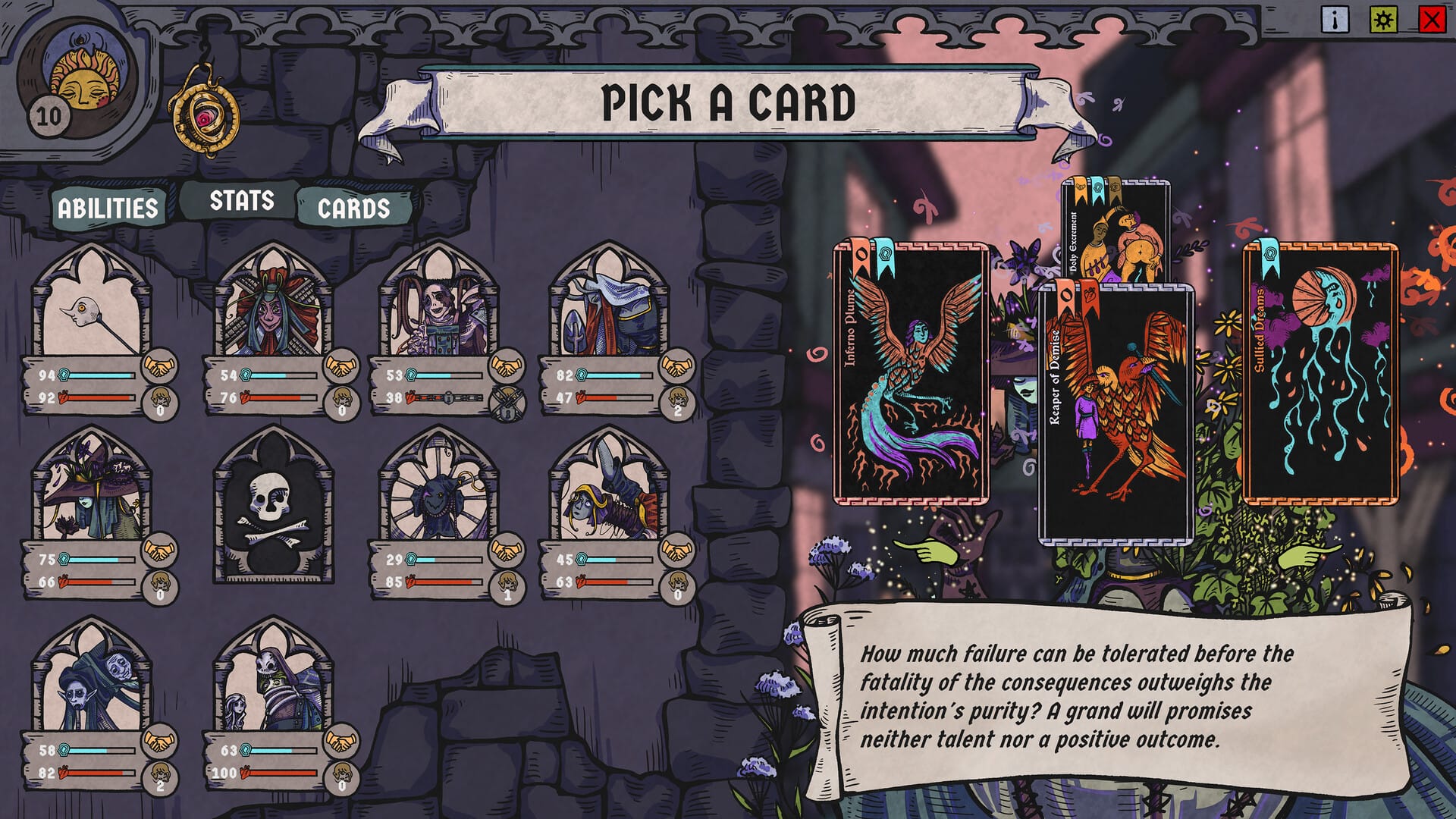
Once three villagers die, the game is over, and one thing must be said: you'll lose a lot. Bloodletter isn't just a game that doesn't bother making your life easier, it's also a war of attrition between the player and the enemy entities. A run can last over an hour, with both advancements and conservative turns to limit damage.
Each day of in-game time is divided into morning, when you heal the villagers; evening, when you adjust your deck; and night, when the entity deals its damage. The turns are then made up of a very specific list of villagers, each requiring varying degrees of healing, trust, and purity. The balance is very delicate, and losing a patient is easyer than you might think.
The only gameplay element I didn't like was the randomness with which the game makes the entity choose which villagers to attack at the end of the day (the number depends on the difficulty level and the entity) and which to punish with negative status effects. There was no reason to make these parameters random: explaining them and making them part of the gameplay flow would have made Bloodletter deeper and more strategic.
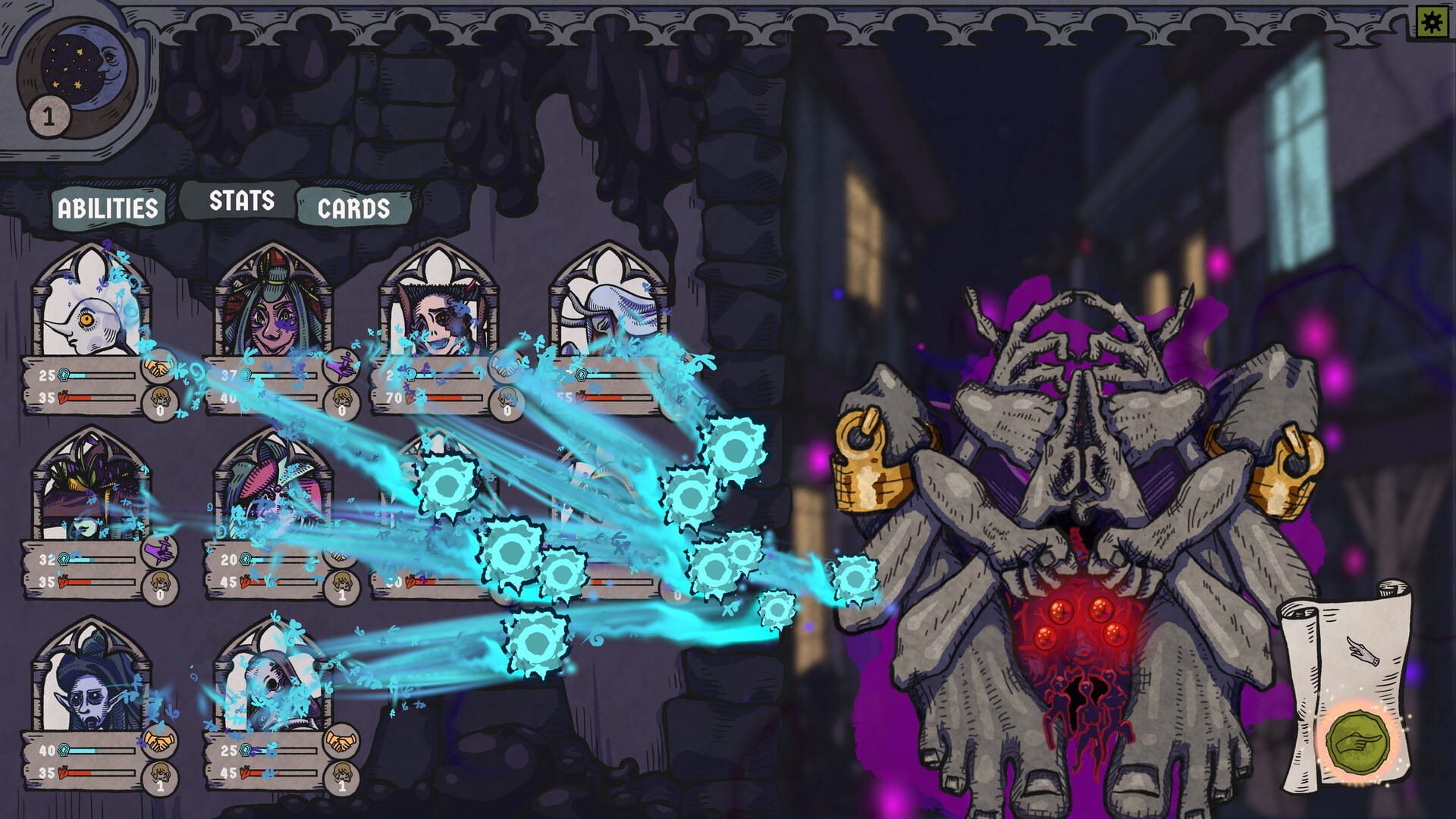
The good news is that Bloodletter has just entered Early Access, so its creators are keeping an ear to the ground for fan suggestions. While the roguelike deckbuilder framework is innovative enough to eliminate any sense of déjà vu, what makes the game unique is its delightfully medieval art style. Between icons, characters, illustrations, and effects, Bloodletter is a haunting and well-crafted transposition of medieval aesthetics to the needs of a modern cultural product.
I recommend Bloodletter if you still have some room to give to this now oversaturated genre and if you enjoy medieval aesthetics and settings, because that's what the game does best. It's fun, but it's slow and not immediately accessible: Early Access will do the game good, and if it gets going quickly, it could ride the wave of Slay the Spire 2 when that too leaves EA.
Don't forget to listen to the new episode of [REDACTED] Podcast, the weekly show in which Francesco Lombardo, Cecilia Ciocchetti, and I analyze the week's most important gaming and esports news.
Thank you for reading Letter to a Gamer. It's only thanks to your support that this newsletter can remain independent, free from advertising, sponsorship, and any other influence beyond the relationship between you and me. If you haven't already, you can join the Telegram group to ask questions, suggest titles for review, and discuss with other enthusiasts. If you love Letter to a Gamer and want to help, you can share this link with your friends and gaming buddies and follow the newsletter on social media (Instagram, Bluesky, TikTok).
See you at the next Letter
Riccardo "Tropic" Lichene